Prof. Mohamed A Ismail Brunel University London, UK Biography: Prof. Ismail has been working at Dept. of Civil and Environmental Engineering, Brunel London School North China University of Technology, Beijing, China since Sept. 2023. Before that, he was working as a full professor at Dept. of Civil Engineering, Miami College of Henan University, Kaifeng, China from October 2018 until Aug. 2023. Before joining Miami College, Prof. Ismail was working as an Associate Professor at Civil and Construction Engineering Department, Faculty of Engineering and Science, Curtin University Malaysia, Sarawak, Malaysia. He received his B. Sc. and M. Sc. Degrees from Alexandria University, Egypt in 1991 and 1996, respectively and his PhD from Nanyang Technological University (NTU), Singapore in 2003.Prof. Ismail teaches undergraduate courses in Civil Engineering Materials, Concrete Technology, Engineering Mechanics, Reinforced Concrete Structural Design, Engineering and Environmental Principles and Theories, Construction Management, Concrete Laboratory, Mechanics of Solids, Structural Analysis and Fluid mechanics. For graduate students, he teaches courses in Advanced Concrete Technology and Advanced Structural Analysis. His research work includes Concrete Technology, Smart Materials in Construction, High Performance Concrete, Durability of Concrete, NDT, Arc Thermal Metal Spray Technology, Sustainable Building Materials and Protection Methods of Reinforced Concrete Structures.Prof. Ismail has extensive teaching and research experiences over 25 years in Canada, South Korea, Malaysia, Egypt, Japan and China. He also had broad experience at Engineering Consultancies and Oil & Gas Firms. Prof. Ismail has published more than 120 papers in refereed journals and International Conferences and 5 Books. He served as a reviewer for many International Journals, Editorial Board Member of a few journals and Editor-in-chief of Challenge Journal of Concrete research letters. Title:Arc Thermal Metal Spraying Method for the purpose of Anti-corrosion of Steel in Hydraulic Structure Prof. Ahmad Safuan Bin A. Rashid Universiti Teknologi Malaysia, Malaysia Biography: Prof. Ahmad Safuan Bin A. Rashid began his academic career as a university academician in March 2005. Over the past 19 years, he has taught 228 credit-hour courses at the university, covering both Undergraduate and Postgraduate levels. He has supervised 21 PhD and 9 Master’s research students as the main supervisor, with 9 PhD and 8 Master’s students having successfully graduated under his guidance. He has led 32 out of 77 research projects in which he has been involved, with a total research value of MYR 5,525,701.00. In addition, he has led and assisted in 30 consultation projects worth MYR 2,318,101.56. He has also received 1 utility innovation award. Prof. Ahmad Safuan holds a Bachelor’s degree in Civil Engineering from UTM, and obtained his Master of Civil Engineering (Geotechnics) from UTM in 2005. He then pursued his PhD in Geotechnical Engineering at the Faculty of Engineering, University of Sheffield, England, graduating in November 2011. His doctoral research focused on the failure behavior of soft soil treated with a group of soil-cement columns formed using the Deep Mixing (DM) method. To date, he has published 153 journal papers, 20 technical proceedings papers, and 3 book chapters. Of his 153 journal publications, 101 are indexed in the ISI database, 52 are indexed by Scopus, and 3 are classified as non-indexed refereed journals. His publications have contributed a total cumulative impact factor of 244.275 to UTM, supporting the university’s research university status. Beyond writing, he actively contributes as a manuscript reviewer and has reviewed more than 50 journals, including the Journal of Geological and Geotechnical Engineering, the InternationalJournal of GEOMATE, and the Geotechnical Testing Journal (ASTM). Assoc. Prof. Reyes Garcia University of Warwick, UK Biography: Reyes Garcia is Associate Professor in Structural Engineering at the University of Warwick (UK). He obtained his 5-year Degree in Civil Engineering (Graduated with Honours) from the University of Michoacan (Mexico), his joint MSc from the ROSE School (Italy) and Grenoble Alpes University (France), and his PhD from the University of Sheffield (UK). Reyes has 25+ years of research/consultancy experience in the fields of structural and sustainable concretes, FRP composites for construction, and earthquake engineering. He has been heavily involved in management and coordination of multi-partner EU and Research Council-funded projects in excess of £5M. He has designed/coordinated large-scale shake table tests in large scale facilities in Europe (CEA Saclay, France; Iasi, Romania). He has published over 140 articles, papers and book chapters. He has contributed actively to the UK TG tasks for Eurocode 8-3, and he is a member of the fib TG 5.1 "FRP Reinforcement for Concrete Structures". He regularly reviews research grant proposals and sits on panels for national/international research councils in the UK (EPSRC), Europe, Asia and Latin America, as well as manuscripts for more than 20 international journals. He is Associate Editor of the ICE's journal Structures and Buildings and of Frontiers in Built Environment, as well as Editorial Board Member of Springer's Discover Polymers and Discover Civil Engineering. He has been a member of committees, keynote speaker and chair in various international conferences in Latin America and Asia. He is also Visiting Professor at Burapha University, Thailand.
Hazardous wastewater chemicals affect the quality of concrete and are responsible for its deterioration, as well as the deterioration of the reinforcement steel bars embedded within, after a certain period of time. Other factors that affect the quality of wastewater treatment reservoirs are ozone and activated granular carbon. These chemicals can cause cracking, fading, and spalling of concrete during short periods of exposure.
There are many recommended methods for protecting concrete in wastewater reservoirs, including polymeric coatings and stainless-steel plating. The polymeric coating has several drawbacks, including color fading and adhesion due to direct exposure to ozone in the wastewater treatment reservoir. The thermal contraction and expansion coefficients of polymers and concrete are different, which causes the detachment of the polymeric coating from concrete and can lead to spalling after a period of time.
The arc thermal spray coating process improves the life span of the wastewater reservoir by using stainless steel coating rather than using its plate. To protect the wastewater reservoir from corrosion by using different metallic coatings deposited by arc thermal spraying process in pH 4 reduced by adding 0.1M sulphuric acid in distilled water.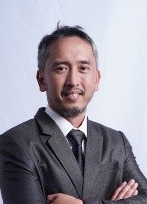
Abstract: The catastrophic 2014–2015 mega-floods along Peninsular Malaysia’s east coast left massive quantities of deposited silt and debris, creating significant environmental and costly cleanup challenges. To convert this waste stream into a viable construction resource, this study investigates the chemical stabilisation of flood mud collected from Kuala Krai, Kelantan, using a biomass silica (BS) binder. Unconfined Compressive Strength (UCS) testing was conducted on untreated samples alongside specimens treated with 3%, 5%, and 10% BS binder across 3-day and 7-day curing intervals. While BS stabilisation enhanced soil strength up to tenfold (reaching 1330 kPa), mechanical performance remained below British Standards Institution (BSI) criteria for structural masonry units. To bridge this performance gap, 2% sodium chloride (cooking salt) was introduced in combination with thermal curing at 105 °C, yielding substantial UCS gains. Microstructural investigations using Field-Emission Scanning Electron Microscopy (FESEM) and Energy-Dispersive X-ray Spectrometry (EDX) revealed that the salt-heat treatment accelerated pozzolanic reactions and particle aggregation. This synergism promoted the rapid precipitation of Calcium Silicate Hydrate (CSH) and Calcium Aluminate Hydrate (CAH) gels, visible as dense, white-coloured matrices that effectively sealed soil micropores. The resulting compact microstructure satisfies the structural demands for eco-friendly, mud-based masonry units, offering a sustainable waste-to-resource solution for the construction industry.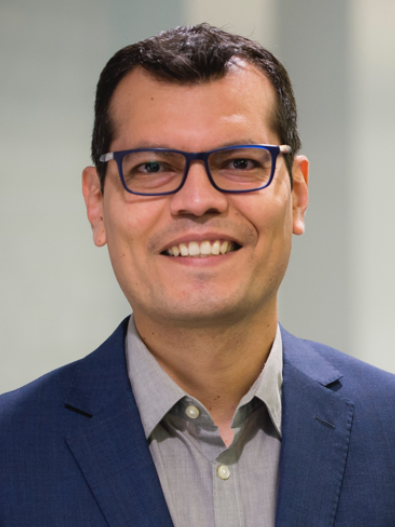
Abstract: Following water, concrete is the most widely used material in the world. In a typical concrete mix, 60-70% of its volume is aggregates. Traditionally, these raw aggregates are extracted from riverbeds and aggregate banks, which has led to environmental problems. At the same time, population growth and the need for new space have led to the replacement of existing buildings in many major cities across Asia. This has resulted in a continuous stream of recycled concrete aggregate (RCA) that, if recycled and treated appropriately, can be used in the production of new Recycled Aggregate Concrete (RAC) to adopt circular economy principles in construction. This presentation shows recent work and research on RAC for structural purposes, with a particular focus on the use of active confinement to improve the compressive strength of RAC. It is shown that, whilst RAC can be effectively used in structural elements, it is always necessary to understand its properties so as to ensure adequate performance.